Flow the Collection · 13 June 2026
Walk through Ommen and you almost can't help looking up. Above the rooftops and between the trees they appear one by one: the sails. The village counts four windmills, each with its own story, and together they tell the history of the Vechtdal better than any museum could. Oil, timber, grain — for centuries things were milled, sawn and pressed here. And the best part? You can visit them all on foot, in a single morning.
The Konijnenbelt — the largest, with the finest view
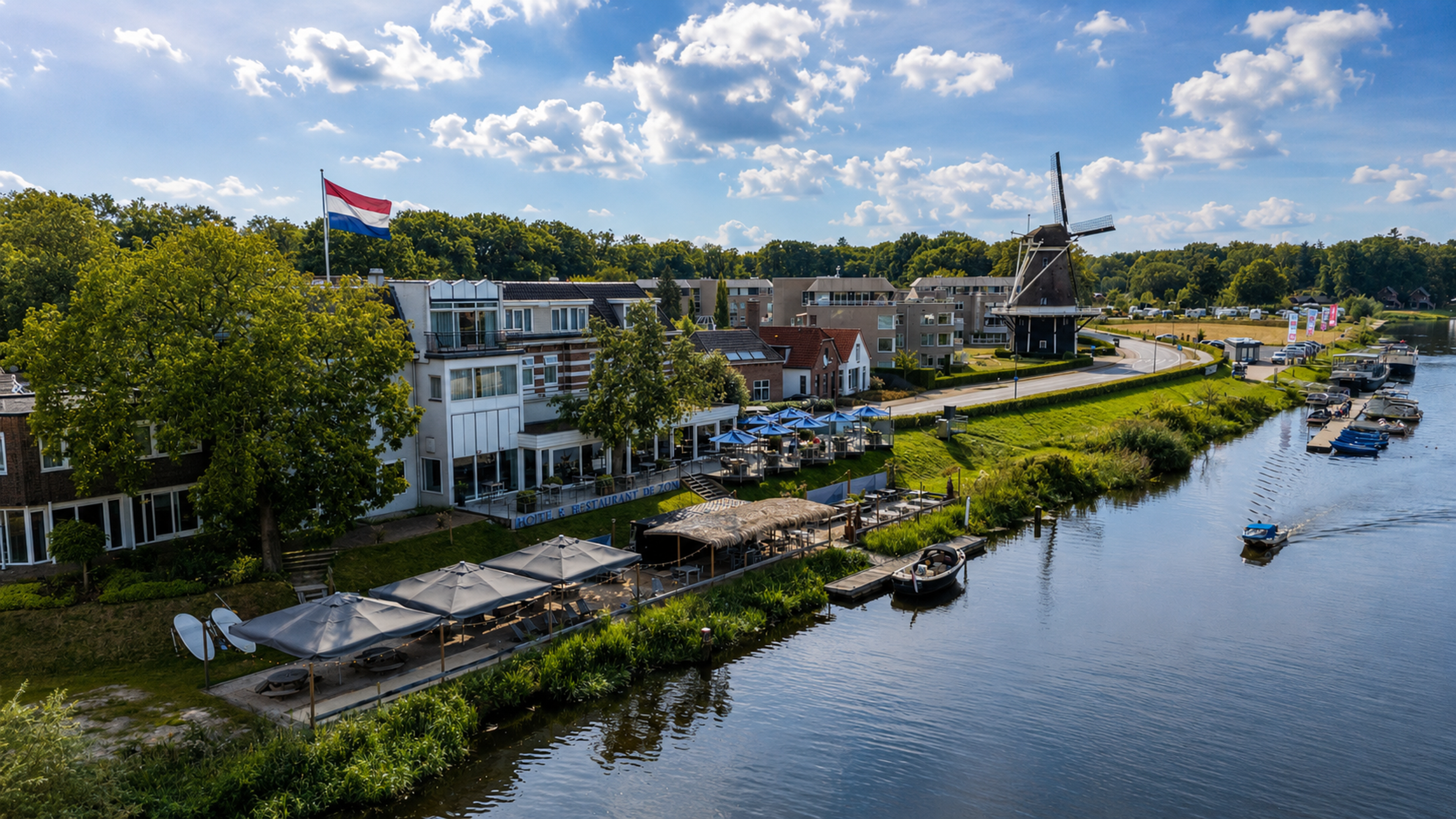
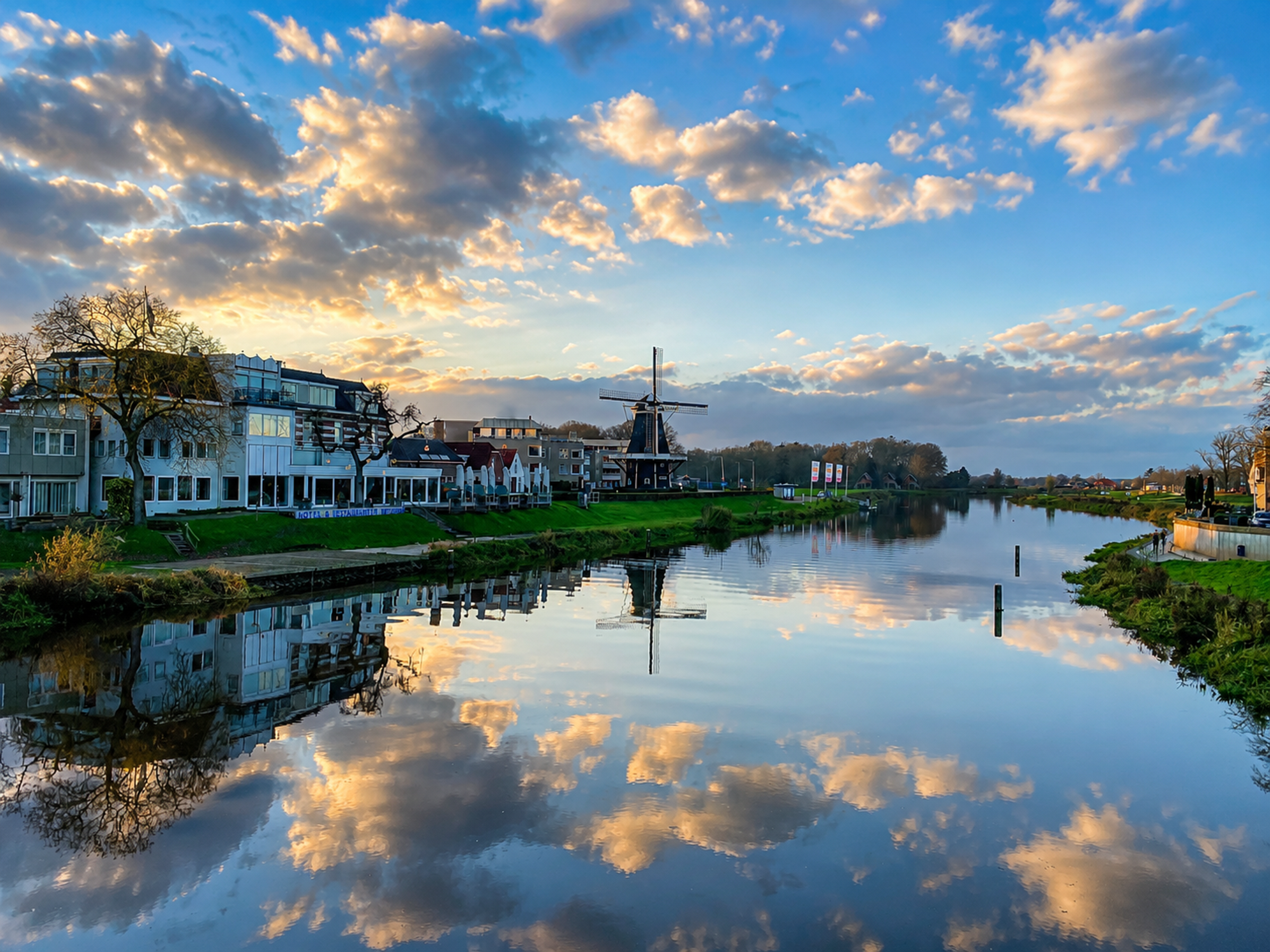
On the Vecht, opposite the centre, stands the Konijnenbelt. In 1806 the miller Hendrik Konijnenbelt bought the land — a garden at the time — and brought his mill all the way from the Zaan region. It became an oil mill: here oil was pressed from rapeseed and linseed, and barley was hulled into groats. Inside, an oven burned day and night, the smoke finding its way out through cracks and chinks. Hendrik did not get to enjoy it for long — he died in 1814, leaving his wife Susanne with eight children and a mill that had barely turned. Still, she kept it running. Today the Konijnenbelt is the largest mill in Ommen and offers the finest view over the town and the Vecht. Beneath the sails you'll now find changing art exhibitions.
Den Oordt — the last of its kind
A little further on, on the bank of the Vecht, stands a rarity: Den Oordt is the only surviving hexagonal sawmill in the Netherlands. In 1824 the carpenter Roelof Makkinga brought it from the Zaan region to Ommen and raised it as a sawmill. The tree trunks lay in the water behind the mill, ready to be floated along the Vecht to the mill pool and sawn into planks. Sawing continued here until 1949. After that the mill was given a second life as a grain mill. Now it is being lovingly restored as a sawmill — exactly as it once began. Inside, on the ground floor, a regional museum takes you back in time.
The Besthmenermolen — built on a mound
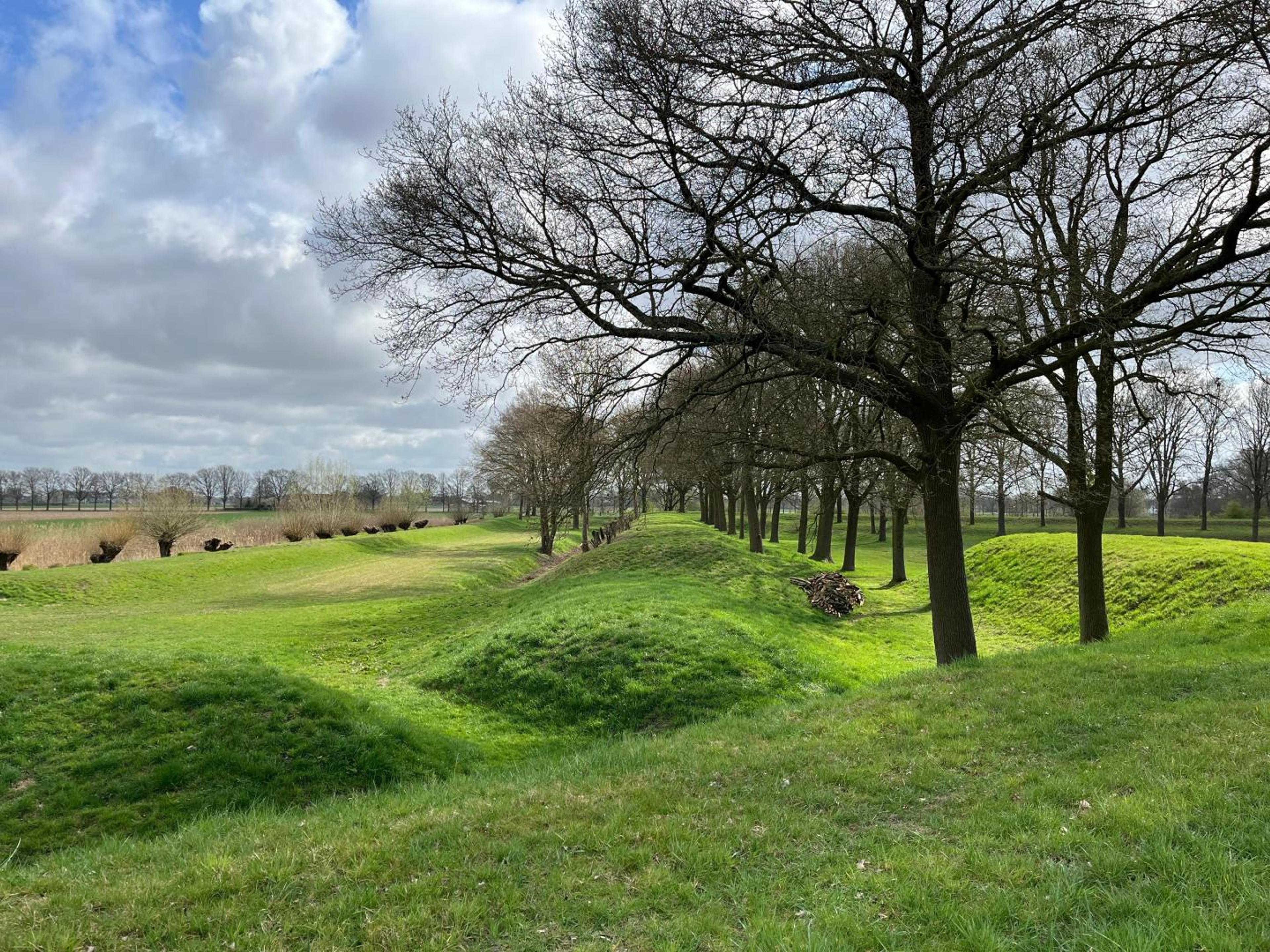
Just outside the centre, towards Den Ham, stands the only mound mill (beltmolen) of Ommen. Built in 1862 on a raised hill — a 'belt' — so that farmers with horse and cart could drive up one side and down the other. Cleverly thought out. The mill is painted in the colours of the Eerde castle estate, where the history of milling on this spot goes back to the sixteenth century. Since 2001 the Besthmenermolen has been able to grind again. On open days the antique threshing machine turns and the millers bake oven-fresh bread — a scent you won't soon forget.
De Lelie — where milling still happens every week
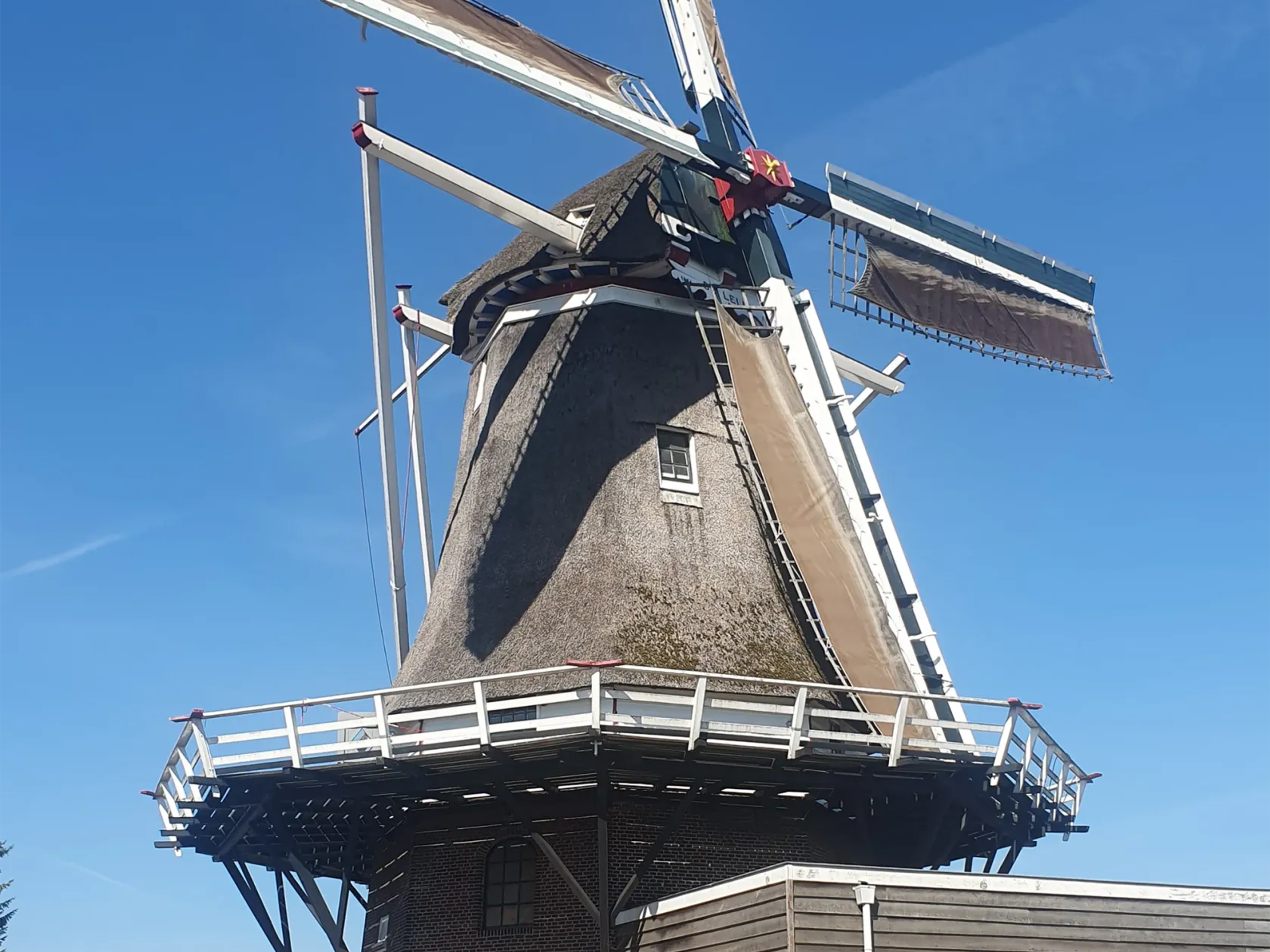
And then De Lelie, on the Molenpad, the only mill where skilled work still takes place every day. This octagonal smock mill from 1846 still has a professional miller who grinds for bakers in the area. Here the ancient grain spelt is processed, grown once more around Ommen — there is even an Ommen spelt beer brewed from it. Beneath the mill you'll find a shop full of flour, dairy, wine and beer. You can come for a tour, a high tea or a tasting. From grain to glass, all under the same sails.
And if you want to go further: the tallest in Overijssel
Got a taste for it? Just outside the village, on the vast Vilsteren estate, stands the Vilsterse Molen — at 36 metres the tallest mill in Overijssel. Twelve mill guides, every one of them from Vilsteren itself, will be only too glad to show you around.
A morning among the sails
Ommen's four mills lie within walking distance of each other, most of them right on the Vecht. Start at the Konijnenbelt for the view, walk along the Vecht to Den Oordt, and finish at De Lelie with a tasting. From Hotel De Zon you're on your way in no time — ask at reception about the mill route and we'll map it out for you.